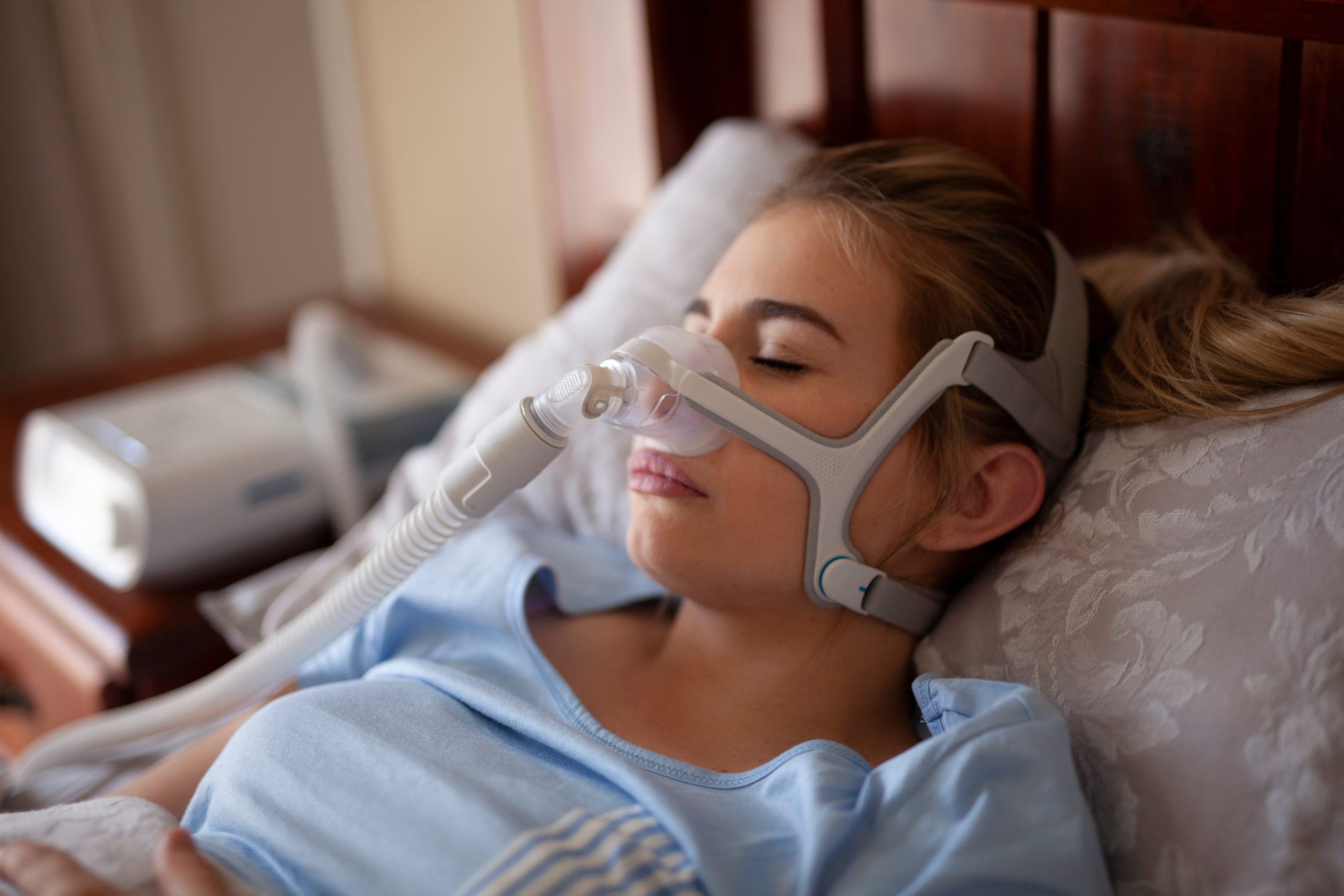
Starting CPAP therapy can feel overwhelming, but most people adjust within a few weeks by wearing the machine consistently, practicing with the mask during the day, finding the right mask fit, and making small adjustments as needed. The key tips for getting used to a CPAP machine are to be patient, use the device every night, and seek support if you encounter challenges.
At ISS Gulfcoast, we understand that starting CPAP therapy is a significant life change. After your initial consultation with our board-certified sleep specialist, Dr. Vincent Pisciotta, and completing a sleep study, a CPAP machine may be prescribed as the most effective treatment for your sleep apnea. Our team in Biloxi, MS, is here to provide the support and guidance you need to make this transition as smooth as possible.
A CPAP – continuous positive airway pressure – machine delivers a steady stream of pressurized air through a mask you wear while you sleep. The machine draws in room air, filters and pressurizes it, then sends it through a flexible hose and mask. That gentle airflow acts as a splint, keeping your upper airway open so your breathing doesn’t pause or become shallow during the night. The machine itself is small enough to sit on a nightstand.
At ISS Gulfcoast, CPAP services include personalized equipment selection and ongoing support so you get a device and mask that match your specific pressure settings and sleep habits.
Sleep apnea causes repeated breathing interruptions during sleep – sometimes dozens or even hundreds of times per hour. Those pauses reduce oxygen levels, fragment your sleep cycles, and put extra strain on your heart over time.
Almost everyone faces an adjustment period. Knowing what to expect makes it easier to push through the early discomfort.
Wearing something strapped to your face while you try to fall asleep feels unnatural at first. The straps, the cushion against your skin, and the presence of the device itself can make it hard to relax and forget it’s there.
The continuous airflow can feel odd, especially when you first put the mask on. Some people describe a sensation of “too much air” or find it hard to exhale naturally against the pressure, leading to a feeling of breathlessness.
A mask that doesn’t seal properly can cause air to blow into your eyes, create whistling sounds, or leave red marks and soreness on the bridge of your nose or cheeks. An overtightened mask can also cause sores or skin breakdown.
The pressurized air can dry out your nasal passages and mouth, leading to congestion, nosebleeds, a scratchy throat, or waking up with a very dry mouth – especially if you tend to breathe through your mouth.
Wearing a mask that covers part – or all – of your face can trigger anxiety or claustrophobia, especially for people who have never worn any kind of facial device. The sensation of being “strapped in” can be anxiety-inducing.
Ironically, the machine designed to improve your sleep can initially make it harder to drift off. The new sensations, sounds, and feelings of the mask can keep your brain alert when it should be winding down, leading to unrestful sleep in the short term.
Modern CPAP machines are relatively quiet, but they’re not silent. The hum of the motor and the sound of air moving through the hose can bother light sleepers or their bed partners.
Many new CPAP users wake up to find they’ve pulled the mask off in their sleep without realizing it. This is extremely common and does not mean CPAP won’t work for you – it’s often the body’s subconscious reaction to the new sensations.
Overcoming these challenges is achievable with the right approach. The following tips for getting used to a CPAP machine have helped countless patients successfully adapt to their therapy.
Adjusting to CPAP is a process, not an overnight fix. It can take anywhere from a few days to a few months of consistent use before the mask starts to feel normal. Don’t get discouraged if the first few nights are difficult – every night you use it is a step in the right direction.
Before you even attempt to sleep with your CPAP, wear the mask around the house while you’re awake. Watch television, read, or scroll your phone with it on. This helps your brain associate the mask with relaxation instead of the pressure of trying to fall asleep.
Start with just the mask for 15 to 20 minutes
Then connect the hose without turning the machine on
Next, turn the machine on at its lowest setting
Once comfortable sitting, try lying down in bed with the mask on and the machine running
Consistency is the single biggest factor in successful CPAP therapy. Use it every night and during naps – not just when you feel like it. Skipping nights resets your adjustment clock and makes the mask feel unfamiliar again.
If wearing the CPAP all night feels impossible at first, set a smaller goal. Start by wearing it for the first one to two hours, then gradually extend to four, then five, and finally the full night. Even partial use is better than no use.
A properly fitted mask should feel snug but not tight. Before bed each night, lie down in your typical sleeping position, turn the machine on, and feel around the edges for air leaks. Gently adjust the straps to eliminate them – even a quarter-inch change can make a difference. Most leaks are caused by a mask that is too loose.
CPAP masks come in three general styles:
Nasal pillows – small cushions that sit at the entrance of each nostril; good for people who feel claustrophobic with larger masks
Nasal masks – cover the nose only; a good middle ground between coverage and minimal contact
Full-face masks – cover both the nose and mouth; necessary for people who breathe through their mouth during sleep
If one style isn’t working after a couple of weeks, talk to our team at ISS Gulfcoast about trying a different option. We can help you test different masks in a controlled, supportive environment before committing to one at home.
Most modern CPAP machines include a built-in heated humidifier. The added moisture warms and humidifies the air before it reaches your airway, reducing dry mouth, nasal congestion, and sore throat. Start in the middle range and adjust up or down based on how you feel in the morning.
Think of CPAP adaptation as fine-tuning rather than overhauling. Each night, change only one thing – a slight strap adjustment, a different humidity level, a new sleeping position, or a pillow swap. This way, you can identify what helps and what doesn’t without overwhelming yourself.
Oils from your skin, dust, and moisture can build up on the mask cushion, hose, and humidifier chamber. A dirty mask is more likely to cause skin breakouts, odors, and poor seals.
Daily: Wipe down the mask cushion with warm, soapy water each morning
Weekly: Wash the mask, headgear, hose, and humidifier chamber in warm water with mild soap; rinse thoroughly and air dry
Monthly: Inspect the mask cushion and hose for wear, cracks, or discoloration; replace parts as recommended by the manufacturer
If you keep waking up with the mask on the floor, try wearing thin cotton or winter gloves to bed. The reduced grip makes it harder for your hands to grab and pull the mask off during sleep. It sounds unusual, but it works for many people during the first few weeks of adjustment.
If the mask triggers anxiety, try a progressive approach:
Hold the mask up to your face without the straps
Wear it with the straps, but with the machine off
Turn on the machine using the “ramp” feature, which starts at a very low pressure and gradually increases over 10 to 30 minutes as you fall asleep
Deep breathing exercises before bed can also help. Inhale slowly for four counts, hold for four counts, and exhale for six counts. Repeat five to ten times while wearing the mask to train your body to relax with it on. Switching to a nasal pillow mask, which has a much smaller footprint on your face, can also reduce feelings of claustrophobia.
Place your CPAP machine on a soft, stable surface – a folded towel on a nightstand works well – to reduce vibration noise. Make sure the air filter is clean, because a clogged filter forces the motor to work harder and louder. Ensure the machine is lower than your head to prevent water from the humidifier from draining into the hose.
Route the hose over the headboard or use a hose clip to minimize movement sounds
Try a white-noise machine, fan, or earplugs to mask the CPAP sound
Your CPAP pressure was set based on results from your sleep study – whether that was an overnight sleep study at a local facility or a home sleep study. But pressure needs can change over time with weight fluctuations, aging, or changes in health. Regular follow-ups ensure your settings stay accurate.
At ISS Gulfcoast, Dr. Vincent Pisciotta evaluates each patient’s sleep study results and determines whether CPAP, another treatment, or lifestyle changes are the right path forward. Our team can help with professional mask fittings, pressure adjustments, and exploring advanced features.
Some discomfort in the first week or two is expected. But if you’re still experiencing significant issues after three to four weeks – persistent skin sores, chronic dry mouth despite using a humidifier, severe sinus pressure, headaches, or ear pressure – contact ISS Gulfcoast. These symptoms may indicate a need for a pressure adjustment, a different mask type, or a check on your overall treatment plan.
You can reach ISS Gulfcoast at (228) 260-0830 or schedule a consultation online to get hands-on help with your CPAP equipment.
Adjusting to a CPAP machine takes time, but the benefits are well worth the effort. By using your device consistently, making small comfort adjustments, and working closely with your sleep specialist, you can overcome the initial challenges and enjoy more restful, healthier sleep. If you continue to experience difficulties, don’t hesitate to seek professional support – finding the right solution can make all the difference in your long-term success with CPAP therapy.

About the Author
Vincent Pisciotta, M.D., F.A.C.S
June 19, 2026
