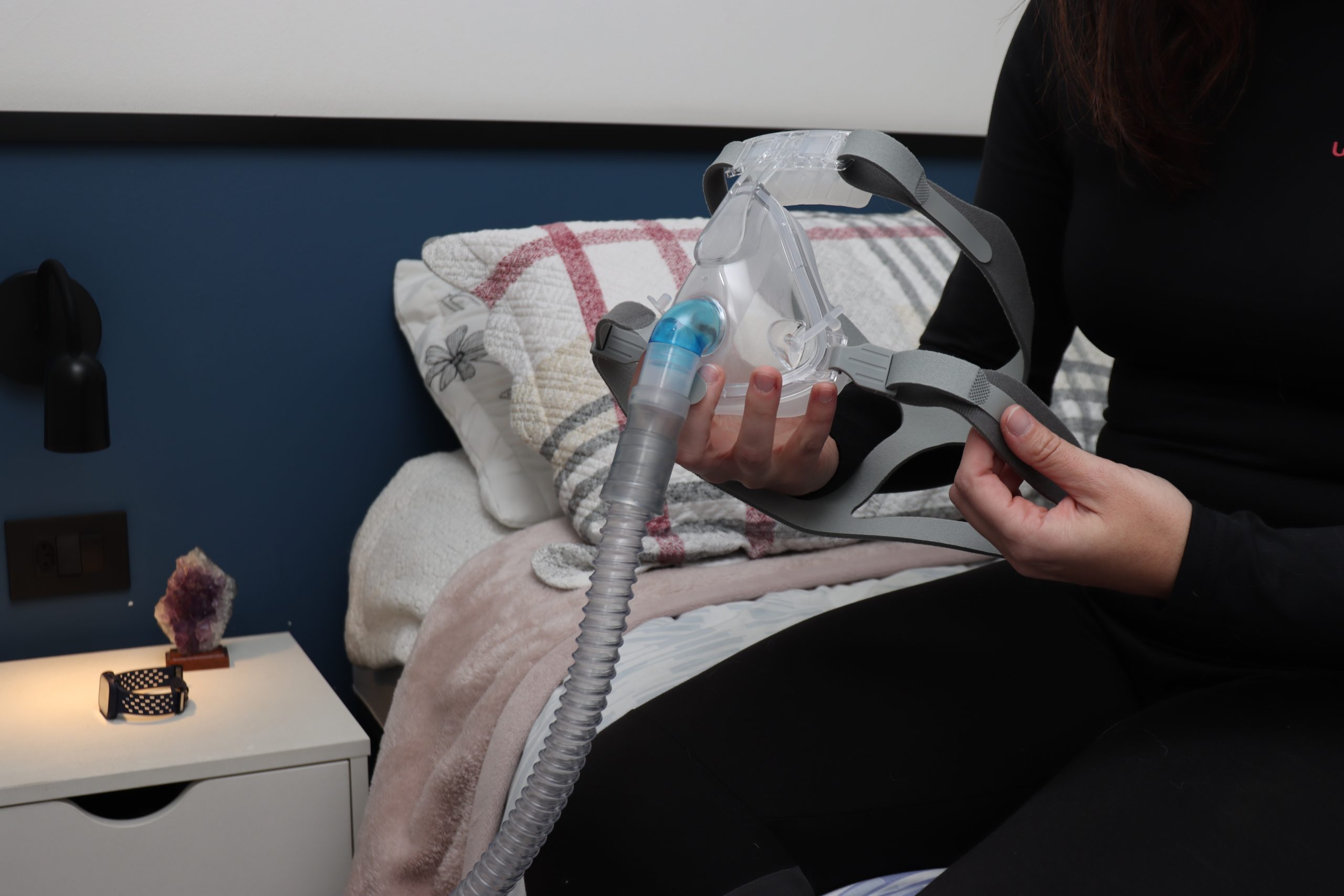
Effective CPAP alternatives for sleep apnea include lifestyle changes, alternative PAP therapies, and other non-invasive treatments, offering options for those who cannot tolerate or prefer not to use a CPAP machine. The right choice depends on your specific diagnosis, the severity of your condition, and your personal health goals, making a thorough evaluation by a sleep specialist the essential first step.
At ISS Gulfcoast in Biloxi, we recognize that a one-size-fits-all approach doesn’t work for sleep health. While CPAP therapy is a cornerstone of treatment, our goal is to find a solution you can use consistently to restore your sleep and protect your health. For some patients, that means exploring options beyond the traditional CPAP mask and machine.
CPAP therapy is considered the gold standard for treating moderate to severe obstructive sleep apnea because it delivers a steady stream of air that keeps your airway open. However, many patients struggle to adapt to CPAP therapy for reasons such as:
Mask Discomfort: Finding a mask that fits perfectly, without leaking or causing skin irritation, can be challenging.
Claustrophobia: The feeling of being confined by a mask can be unsettling and make it difficult to fall asleep.
Air Pressure Issues: Some individuals find the constant pressure uncomfortable or have difficulty exhaling against the airflow.
Dryness and Congestion: The airflow can lead to a dry mouth, throat, or nasal passages.
Noise: While modern machines are much quieter, the sound can still be disruptive for the user or their partner.
Inconvenience: Cleaning the equipment and traveling with the machine can be cumbersome.
If you’ve tried CPAP and found it difficult to use every night, you are not alone. The most effective treatment is the one you use consistently. If that isn’t your CPAP machine, it’s time to discuss other possibilities with a sleep specialist.
Most cases of sleep apnea are obstructive sleep apnea (OSA). During sleep, the muscles in your throat relax, and for people with OSA, these tissues can relax too much, collapsing and blocking the airway. This leads to pauses in breathing, which your brain registers as a choking event. It briefly wakes you up to resume breathing – often so quickly you don’t remember it. This can happen hundreds of times a night, preventing you from getting deep, restful sleep and starving your body of oxygen.
CPAP therapy directly counters this by using positive air pressure as a pneumatic “splint” to hold the airway open all night. Any alternative treatment must also achieve this goal: keeping the airway open so you can breathe continuously and sleep soundly.
For many patients, especially those with mild to moderate sleep apnea, non-invasive options can be highly effective. At ISS Gulfcoast, every patient starts with an in-person consultation with Dr. Vincent Pisciotta, a board-certified sleep specialist. He will assess your symptoms and medical history to determine the diagnostic path, which always involves a sleep study – either a convenient home sleep study or a more detailed overnight sleep study at a local facility. The results of this study are critical for identifying which alternatives are right for you.
Lifestyle modifications are a critical component of a comprehensive treatment plan. While these changes may not eliminate sleep apnea on their own, they can significantly reduce its severity and improve the effectiveness of other treatments. Fatty deposits in the neck and tongue area can narrow the airway, increasing the risk of collapse during sleep.
For many overweight patients, losing even 10% of their body weight can significantly reduce the Apnea-Hypopnea Index (AHI) – the measure of sleep apnea severity. In some cases, substantial weight loss can even resolve mild sleep apnea entirely. Dr. Pisciotta often counsels patients on the importance of weight management as part of their overall treatment strategy.
Avoiding Alcohol and Sedatives: Alcohol, sedatives, and certain medications relax the throat muscles, which can worsen sleep apnea and snoring. Avoiding them, especially in the hours before bed, is often recommended.
Quitting Smoking: Smoking causes inflammation and fluid retention in the upper airway, which can exacerbate OSA. Quitting is beneficial for countless health reasons, and improving your sleep is one of them.
Treating Nasal Congestion: If you have allergies or other issues causing nasal congestion, you are more likely to breathe through your mouth, increasing the risk of airway collapse. Managing allergies and keeping your nasal passages clear can be helpful.
If the single, constant pressure of a CPAP is the problem, other forms of PAP may be more tolerable.
APAP (Automatic Positive Airway Pressure): An APAP machine automatically adjusts the pressure level throughout the night in response to your breathing. It provides more pressure when it detects an obstruction and less pressure when your breathing is stable. Many patients find this more comfortable than the fixed pressure of a CPAP.
BiPAP (Bilevel Positive Airway Pressure): A BiPAP machine delivers two levels of pressure: a higher pressure when you inhale and a lower pressure when you exhale. This can make breathing out feel more natural and is often prescribed for patients who need higher pressures or have other coexisting conditions.
For patients with mild to moderate OSA, a custom-fitted oral appliance is often an effective alternative to CPAP. These devices, worn during sleep like a mouthguard, work by repositioning the lower jaw or tongue slightly forward to keep the airway open. They are quieter, portable, and far easier to tolerate than a CPAP machine. Dr. Pisciotta can refer you to a qualified dentist specializing in dental sleep medicine for fitting and follow-up.
It’s important to note that there is another, less common type of sleep apnea called central sleep apnea (CSA). In CSA, the airway is not blocked. Instead, the brain fails to send the proper signals to the muscles that control breathing. While some of the alternatives discussed may help, CSA often requires more advanced therapies, such as ASV (Adaptive Servo-Ventilation), a sophisticated form of PAP therapy that adapts to the patient’s breathing patterns on a breath-by-breath basis. A thorough diagnosis is key to distinguishing between obstructive and central apnea.
With so many options, how do you know which one is the correct choice? The answer is you don’t have to figure it out alone.
The most important step in finding successful CPAP alternatives for sleep apnea is a proper diagnosis. The choice of treatment will be guided by several factors uncovered during your evaluation:
Type and Severity of Sleep Apnea: The results from your home or in-lab sleep study will determine your AHI, oxygen levels, and whether your apnea is obstructive, central, or positional. Mild apnea may respond well to lifestyle changes, while severe apnea may require more advanced therapy.
Your Anatomy: The physical structure of your jaw, tongue, and airway plays a huge role.
Your Lifestyle and Preferences: Your willingness and ability to comply with a treatment are paramount. A traveling professional may prefer a portable solution, while another patient may be open to a different approach for a permanent fix.
Coexisting Medical Conditions: Other health issues can influence which treatments are safe and effective for you.
Navigating these options requires the expertise of a board-certified sleep specialist. Dr. Vincent Pisciotta has over 20 years of experience diagnosing and treating the full spectrum of sleep disorders in Biloxi, MS. His independent practice, ISS Gulfcoast, is focused solely on providing expert sleep care.
The process begins with a thorough consultation, proceeds to precise diagnostic testing, and concludes with a personalized treatment plan that he develops with you, not for you. He will explain your sleep study results in detail and present all viable options, from CPAP and its alternatives to lifestyle changes and other advanced procedures.
While CPAP is an excellent treatment for sleep apnea, it is not the only one. For the millions of people who struggle with CPAP compliance, a wide array of effective alternatives exists. From lifestyle changes to advanced PAP therapies, there are more ways than ever to treat your sleep apnea and reclaim your health. The key is not to give up but to partner with a specialist who can guide you to the solution that fits your diagnosis, your anatomy, and your life.

About the Author
Vincent Pisciotta, M.D., F.A.C.S
May 29, 2026
